

[Updated July 16, 2016, to add copyright designation.]
[Updated August 27, 2017, to fix typo in URL.]
[Updated August 27, 2019, to change title.]

Missed the 1L year? You don’t have to go to law school – just read about it here.


[Updated July 16, 2016, to add copyright designation.]
[Updated August 27, 2017, to fix typo in URL.]
[Updated August 27, 2019, to change title.]
Five years out, we finally feel prepared to comment on the Law School Experience.

[Updated July 16, 2016, to add copyright designation.]
[Updated August 27, 2017, to fix typo in URL.]
[Updated August 27, 2019, to change title.]
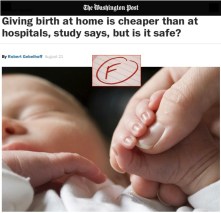
The Washington Post receives an F for its particularly poor reporting on a new study by Janssen, et al., “Costs of Planned Home vs. Hospital Birth in British Columbia Attended by Registered Midwives and Physicians.” WaPo focused on an issue that was not the main subject of the study and, in addition, gave disproportionate weight to a known biased opinion.
WaPo’s coverage is disappointing. They are capable of better. See for example this much more balanced article from Medical Daily. Shape up, WaPo! Stick to the point, and find a less biased expert!
Dear Reader, after reading that stressful list of faults, you deserve a reward. Take a look at the beautiful mamas and babies at Black Women Do VBAC and share in their unmistakable joy.
 Students for a Democratic Society: A Graphic History, by Harvey Pekar, Gary Dumm, and Paul Buhle. As a member of the unnamed generation between the Baby Boomers and Gen. X, I’ve been told my whole life that I missed the best times: “Nothing has ever been as good as it was in 1968.” I thought I’d view that assertion through the lens of people who experienced 1968 politically. I have a new appreciation for the graphic novel; it’s perfect for this kind of story. I was surprised, though, that this isn’t really a linear history of SDS, but rather a series of stories about different personages, as told and illustrated by a number of authors.
 The Righteous Mind: Why Good People are Divided by Politics and Religion, by Jonathan Haidt. I missed this book when it was published to great acclaim in 2012. Actually, I confess that I am not reading this – yet. I watched a 2013 video of Haidt speaking about his work. I’m interested in this topic because so much of my own work stretches across some big ideological divides. Within the home birth community are many members with extraordinarily different values – and yet we manage to work together toward common goals. I’d like to extend that dynamic to other areas.
 Into Our Own Hands: The Women’s Health Movement in the United States, 1969-1990, by Sandra Morgen. This is another important work I missed when it was published in 2002. I found it last month while looking at a history of the National Women’s Health Network on the organization’s website, although I can’t retrace the exact path now. I’m particularly looking forward to reading Chapter 6, “The Changer and the Changed: The Women’s Health Movement, Doctors, and Organized Medicine.”
 Brainstorm: The Power and Purpose of the Teenage Brain, by Daniel M. Siegel. This book was recommended to me for its insight into teenage behavior. I’ve been a teenager, of course, but somehow the experience doesn’t always translate to parenting one. I suspect this is a book I’ll skim rather than read through, but I am immediately attracted to the subheading “Ambivalence, Emotional Confusion, and the Right Side of the Brain.” That sounds about right.
 Bet Me, by Jennifer Crusie. As the cover might suggest, this is a lightweight, lighthearted book. The library catalog lists it under the subject heading Dating (Social customs) — Fiction. I’m listening to the audiobook in the car with great delight. If you see me driving around town alternately laughing and blushing, you’ll know what I’m listening to. Crusie’s characters excel at delivering the bon mot – much like on West Wing, if you can imagine them substituting romance for politics: ““Statistics show that men are interested in three things: careers, sports, and sex. That’s why they love professional cheerleaders.” (See the remainder of the quote here.)
Happy reading to all. Remember, support your public libraries. Borrow often to boost their circulation figures! Michigan residents with participating libraries should remember the Michigan ELibrary is able to quickly place interlibrary loans and put some great collections within our reach.
In Murphy’s Breast: Lactation Law and Advocacy in 2014, I discuss four instances in which breastfeeding parents found themselves affected by law and advocacy efforts last year. Many thanks t o Michigan State University’s Center for Ethics and Humanities in the Life Sciences for inviting me to write this piece.
Special bonus for Mama’s Got a Plan readers: A fifth section of the post that had to be cut to meet length requirements is included below. More is more!
Public health recommendations have unwittingly discouraged breastfeeding by insisting on separating parents and babies during sleep, based on incomplete and sometimes outright faulty evidence. While maintaining breastfeeding depends on mothers’ ability to feed babies at night, the practice of bedsharing, common throughout the world, is discouraged in the U.S. for fear that sleeping parents will accidentally suffocate their babies. Many public health initiatives focus on procuring safety-rated cribs for newborns.
Proponents of bedsharing – and breastfeeding – have long held that while babies should sleep apart under certain conditions, such as having an impaired parent or one who smokes, in most cases infant safety increases when infants sleep in close proximity to their breastfeeding mothers, on an appropriate surface. The supposedly higher rate of Sudden Infant Death Syndrome (SIDS) attributed to bedsharing has been discredited by the presence of co-founding variables. Breastfeeding is believed to be protective against SIDS and, of course, in many other ways beneficial to infant health.
Evidence now shows that recommendations for separate infant sleep have actually harmed infant health. Parents who try to heed warnings to avoid bedsharing are more likely to fall asleep on couches or padded chairs with their infants; those surfaces are dangerous to infants, because babies may become trapped between their parents and padded crevices of the furniture.
How curious then that policy makers continue to emphasize “Safe Sleep” policies that equate deterrence from bedsharing with increased infant safety. Michigan went so far as to enact legislation that compels hospitals to advise new parents on infant sleep practices. To be fair, the law itself does not include a warning against bedsharing. It delegates the power to issue recommendations to the Michigan Department of Community Health – that persists in its prescription that babies sleep by themselves, on their back, without any items in their cribs. The law, having created additional liability for hospitals that fail to distribute safe sleep materials to their patients, excuses hospitals from such liability if they retain a “signed parent acknowledgment statement” of having received such materials.
You can read the article in its entirety here.
An article of dubious quality quotes President Obama’s remarks on improving daycare:
And sometimes, someone, usually mom, leaves the workplace to stay home with the kids, which then leaves her earning a lower wage for the rest of her life as a result. And that’s not a choice we want Americans to make.
Then it misinterprets these remarks with this title: Obama on Moms Who Stay Home to Raise Kids: ‘That’s Not a Choice We Want Americans to Make.’
It troubles me that readers take the article at face value and allow discussion of it to devolve into an argument about whether it is “better” for mothers to stay at home with small children or to remain in the paid workforce. These arguments serve only to divide us and to keep us from uniting in support of policies that safeguard all families.
On the whole I believe that making sure families have access to quality daycare is a positive move. I do, however, find some things troubling in the President’s speech.
We love that word “choice,” don’t we? Our lives are just one big candy store and we get to pick whatever we want.

(L) Oliver Tarbell Eddy (R) Dorothea Lange
The truth is that some people do get to pick, which is not to say that all their choices are necessarily desirable. And some people do not. For example, most people receiving government assistance are required to work outside the home. So if we do believe that it is “best” for children to have their mothers at home, clearly we have decided that some children do not deserve the best.
 President Obama supports equal pay for equal work, and I’m glad of it. But that is hardly a new proposition.
When parents leave the workforce in order to spend more time caring for their children, they are hardly leaving work behind – just paid work. We as a nation are reaping the benefit of these parents’ – mostly women’s – unpaid work. Just this week, the UN Special Rapporteur on extreme poverty called on countries “to recognize unpaid care work as a major human rights issue.”
If we really valued the work that is required to raise our children, we would fairly compensate anyone who took on this task: mothers, fathers, and traditional paid caregivers. These last are often parents themselves, struggling to afford care for their own children.
Many young parents do not consider that when forgoing wages in order to take care of children, they are also forfeiting future Social Security payments. Having children is the number one reason women in the U.S. fall into poverty – it’s easy to see why that is the case, but not why it should be.
Do we really believe that motherhood robs us of the ability to be competent workers? At the same time that we laud motherhood as being a difficult yet supremely worthwhile task?
People’s experience of parenthood differs, but it is hard to accept that everyone who makes cabinets or medicines or burgers or nuclear reactors somehow irrevocably loses the ability to do so after spending time with children. We can look to other countries that manage to not penalize women for taking time off work to raise children.
There is no reason we cannot adjust our national policy to support all parents – those who would like to be home with their children, those who would not, and those who want a little of both – regardless of whether they can finance these choices themselves or require government assistance to do so. In the end, parents know what is best for their families and should be able to make these decisions, free from mandates imposed on the basis of economics or skin color or profession. This is the third arm of Reproductive Justice: the freedom to raise our children in safe conditions and with dignity.
Are you listening, President Obama? I’ve just written your next speech for you. 
 Emily Crockett of RH Reality Check wrote an excellent article on the state of direct entry midwifery in Delaware. She correctly identified the chief obstacle to practice: while the law requires these midwives to maintain collaborative agreements with physicians, physicians aren’t obligated to collaborate. The predictable result: no collaborative agreements and very few midwives who can legally practice.
A little additional context might be helpful to those wishing to understand how the law works and how it might be improved. First of all, let’s start by clearing up two terms that are often used interchangably, to everyone’s confusion:
For example: A direct entry midwife (i.e. a midwife who is not a nurse) successfully undergoes the education, training, and testing requirements to be certified by the North American Registry of Midwives as a Certified Professional Midwife (CPM). The certification alone does not permit her to practice legally in any state, any more than graduating from medical school allows a physician to practice legally. The midwife is lucky enough to live in Wisconsin, one of the twenty-six states in which CPMs can obtain a license. She applies for a license, pays her fee, and is able to practice under Wisconsin law. She must abide by the licensure requirements in statute as well as any rules that the governing state department or agency has promulgated regarding midwifery practice.
As long as we’re defining terms, let’s talk about different kinds of law:
Delaware is one of two states in which CPMs cannot obtain a license but are nevertheless legally authorized to practice. The extent of the authorization in statute is that the Delaware Department of Health and Social Services may issue regulations that:
Control the practice of non-nurse midwives including the issuance of permits and protect and promote the health of all mothers and children[.] – Del. Code Ann. tit. 16, §122 (3)(h), emphasis added
In other words, the legislature left everything up to the Department of Health and Social Services, so most of the law that controls Delaware CPMs lives in the rules. And those rules, as outlined in Crockett’s article, require a collaborative practice agreement before a midwife can obtain a permit (note: not a license). As an aside, the rules require startlingly little else – the exact fee an applicant must pay, the kinds of births midwives may attend, the medications they may carry. None of these are specified, although there is a suggestion that some of these items fall under the collaborative agreement. It is possible, therefore, that the Department envisioned physicians as setting midwife standards of practice.
Current Delaware law may lead concerned parties to oppose regulating midwives. This is unfortunate, in my opinion, because the problem is not that midwives are regulated, but that they are regulated badly. Rather than being licensed as an independent profession, midwives are currently permitted to practice based on subordination to physicians. The remedy is full licensure – and that is exactly what advocates support in a bill currently active in the Delaware legislature.
The devil still remains in the details. Should the bill pass and become law, advocates must remain engaged throughout the process of rule promulgation in order to ensure that the rules are not restrictive to the extent that midwives are unable to practice.
Readers familiar with this issue may have noticed that I have failed to mention the safety of midwife-attended births. That may or may not be a subject for another post. However, in a sense it’s a moot point: the Delaware legislature obviously believes midwife-attended births are safe, because it passed legislation to permit midwives to practice under its constitutional and statutory duty is to protect the public’s health. Families will continue to have midwife-attended births; it is now the legislature’s duty to create an environment where midwives can practice under the protection and discipline of state law. At the end of the day, although licensure does not guarantee quality – just think of other health professions! or lawyers! – it does provide a structure where midwives’ qualifications are knowable and where midwives are subject to rules designed to keep parents and babies safe.
Please follow the Facebook page for Mama’s Got a Plan!
“[U]nconsented-to medical treatment is only generally a battery. Consent to a particular procedure may be “inferred from the patient’s action of seeking treatment or some other act manifesting a willingness to submit to a particular course of treatment.” [internal cite omitted]. Here, Carol came to the hospital for the purpose of medical treatment: the birth of Mikayla. The complaint itself admits that Carol had used marijuana and methamphetamines the week before giving birth to Mikayla. […] Insofar as we can determine from the pleadings and the record, Carol did not at any time communicate to any personnel at the hospital that she wished not to be tested for drugs. Testing Carol for drugs without first obtaining her consent did not constitute a battery here, where Carol unambiguously consented to the course of treatment — the birth of Mikayla — pursuant to which the drug test was conducted, and where Carol in no way communicated a desire not to be tested.”
I ran across the text above when looking for something else entirely in Michigan case law. In the 2008 case of Jodis v. Brubaker, the Michigan Court of Appeals apparently felt that when you enter a hospital to give birth, you automatically consent to anything your providers think is necessary, unless you explicitly tell your providers you do not consent to that procedure they haven’t told you about.
I will leave it to your imagination as to how this might play out for people in labor and what would happen if this scenario were extended to any other class of people seeking medical care.
What we have here is neither informed nor consent.



 Mama's Got a Plan: